

SCFH wasn’t built to be big. It was built to be better, more personal, more attentive and more connected to the people doing the work.






We take a truly holistic approach to digital. From readiness programmes and governance support through to full transformation, data strategy, technology enablement, and end-to-end workstream delivery, we provide seamless support at every stage of your journey.
We help leadership teams define clear and practical digital strategies that align technology investment with organisational priorities and evolving models of care.
Our advisory work includes digital strategy development, technology roadmaps, investment planning and independent strategic guidance to support confident decision-making.
Our service offerings include:
Strategy and Innovation: Helping clients shape direction, priorities and future‑focused change
Readiness and Assessment: Understanding current state, risks and capability to deliver
Financial and Commercial: Supporting robust business cases, investment decisions and commercial models
We support organisations to successfully deliver complex digital and technology programmes.
We provide programme leadership, project delivery expertise and specialist support to ensure initiatives are implemented effectively, with strong governance, stakeholder engagement and measurable outcomes.
Our service offerings include:
Project and Programme Delivery: From staff augmentation to fully outsourced or milestone‑based delivery
Planning and Governance: Setting up strong structures, controls and decision‑making
Intervention and Remediation: Stepping in to stabilise, recover or reset challenged work
Digital transformation continues beyond implementation.
We help organisations maximise the value of existing digital investments by improving system performance, strengthening user adoption and enhancing digital services through continuous improvement and optimisation.
Our service offerings include:
Training and Adoption: Building capability and embedding change
Benefits Realisation: Ensuring outcomes are measured and delivered
Productivity: Improving ways of working, efficiency and value
Our expertise spans the core components of modern digital healthcare environments, supporting organisations to build resilient, integrated and future-ready digital services.

Supporting healthcare organisations to develop digitally enabled environments where infrastructure, facilities and technology are aligned to support modern clinical services and operational resilience.

Advising on and supporting the implementation and optimisation of clinical and operational applications that underpin healthcare delivery.

Strengthening the technology foundations that support healthcare systems, including technology strategy, service design, governance, and operational improvement.

Explore our latest insights and resources on healthcare trends, best practices and industry news. Stay ahead of the curve with our expert analysis and thought leadership.

SCFH has achieved BS EN ISO 42001:2023 certification, the international standard for Artificial Intelligence Management Systems (AIMS), marking another important milestone in our commitment to quality, governance and responsible innovation.As artificial intelligence becomes increasingly embedded in healthcare, the opportunities to improve services, support clinical teams and enhance patient outcomes are significant. But realising that potential requires more than technology alone. It demands clear accountability, effective risk management and an approach that puts people first.ISO 42001 provides an internationally recognised framework for organisations to establish, implement, maintain and continually improve how they manage AI.Building trust in AIFor healthcare organisations, trust is fundamental. As AI becomes more widely adopted, patients, clinicians and healthcare leaders need confidence that technology is being used appropriately, with clear safeguards and effective oversight.Our certification reflects SCFH's commitment to these principles and provides a recognised framework for managing AI-related risks and responsibilities.The certification reinforces our focus on:Responsible AI: Supporting the ethical and considered use of AI, with appropriate human oversight.Risk management: Identifying and managing risks associated with AI.Accountability and transparency: Establishing clear responsibilities and decision-making processes.Continuous improvement: Evolving our approach as technology and expectations develop.Supporting responsible innovation in healthcareAt SCFH, we work alongside healthcare organisations to turn digital and technological ambition into practical, sustainable improvements.Our ISO 42001 certification covers an Artificial Intelligence Management System with a stated scope encompassing our strategic advisory, programme delivery, digital optimisation and technology services.As AI continues to develop, this provides an important foundation for supporting healthcare organisations in navigating new opportunities and challenges, while maintaining a clear focus on delivering meaningful outcomes.Building on our existing ISO 9001, ISO 14001 and ISO 27001 achievements, this latest certification further strengthens our commitment to quality, environmental responsibility, information security and robust governance across our work.A huge thank you to everyone involved in achieving this certification. It's a reflection of the hard work, collaboration and commitment of our team, and another important step in continuing to build a business that our clients and colleagues can have confidence in.

21 October 2026

The buildings in which we deliver healthcare have a significant impact on the environment, the way services operate and the experiences of patients and staff. Yet when we talk about digital transformation in healthcare, the focus is often on clinical systems and technologies, rather than the buildings and infrastructure that support them.I believe there's a real opportunity to change that.By connecting buildings, technology and data, we can create healthcare environments that are not only smarter and more efficient, but also more sustainable.It's a topic I'll be exploring at the Sustainability in Healthcare Summit 2026 in Dublin this October, where I'll be speaking about how digitally enabled estates can help healthcare organisations reduce energy consumption, make better use of space and assets, and turn digital investment into measurable environmental, operational and financial benefits.Looking Beyond the TechnologyOne of the most important considerations when developing a digital estates strategy is understanding what we're actually trying to achieve.Technology alone doesn't make a building sustainable. It's how we use that technology, the information it provides and the decisions it enables that make the difference.Whether we're looking at an existing hospital or planning a new healthcare facility, there are opportunities to improve how buildings perform, how resources are managed and how spaces support the people using them.For example, connecting building management systems with operational data can provide greater visibility of energy consumption, space utilisation and asset performance. This allows organisations to identify inefficiencies, make more informed decisions and target investment where it can have the greatest impact.But to realise these benefits, digital needs to be considered as part of the wider estates and operational strategy, rather than something added later.Making Better Use of What We Already HaveWhen discussing sustainable healthcare infrastructure, it's easy to focus on new hospitals and major developments. While embedding digital capabilities into new buildings is essential, there is also significant potential within existing healthcare estates.Many organisations are already operating complex environments with ageing infrastructure, increasing demand and competing financial pressures.Digital technology can help us understand these environments more effectively.From monitoring energy consumption and improving maintenance planning to understanding how clinical spaces and assets are used, better access to data can support practical improvements without necessarily requiring large-scale redevelopment.The opportunity is to make better use of what we already have while ensuring future investments support longer-term sustainability goals.Turning Digital Investment into Measurable BenefitsHealthcare organisations are under increasing pressure to demonstrate value from their digital investments.For digital estates, this means looking beyond the implementation of technology and focusing on the outcomes it delivers.Before we can improve the performance of our healthcare estates, we need to understand how they're operating today. Better visibility of building data, energy consumption and asset utilisation gives organisations the foundation to make informed decisions, identify opportunities for improvement and measure meaningful progress.Can we reduce energy consumption and operating costs? Can we improve the utilisation of buildings and assets? Can we create environments that are more comfortable, efficient and responsive to the needs of patients and staff?These are the questions that should inform our approach.By establishing clear objectives and measures from the outset, organisations can better understand the environmental, operational and financial impact of their investments.Importantly, these benefits aren't achieved by estates or digital teams working in isolation.Bringing together estates, digital, clinical and operational colleagues is essential to ensuring that technology supports the wider needs of healthcare organisations and the people who use their facilities.Connecting People, Buildings and TechnologyThroughout my career in digital strategy, enterprise architecture and technology transformation, I've seen the importance of connecting technology decisions with wider organisational objectives.Having worked across major digital transformation initiatives and international hospital programmes, including the NHS New Hospital Programme, I recognise the value of embedding digital thinking into the earliest stages of planning and development.But this approach is just as relevant to existing buildings as it is to new developments.At SCFH, our Digitally Enabled Healthcare Estates practice focuses on helping healthcare organisations connect their digital ambitions with the infrastructure, technology and operational capabilities needed to deliver them.Ultimately, smarter healthcare estates aren't simply about more connected buildings. They're about creating environments that work better for the people delivering and receiving care, while making more responsible use of resources.My session, "Smarter Estates, Sustainable Care. Driving Sustainability through Digital Estates," forms part of Session 3, The Role of AI and Digital Technology in Sustainable Healthcare.The summit's theme, "Partnerships for Sustainable Healthcare – turning shared goals into measurable actions and solutions," is particularly relevant to this discussion.Creating more sustainable healthcare environments requires collaboration across disciplines, a shared understanding of the challenges and a clear focus on measurable outcomes.About AndyAndy is an experienced Digital Strategist, Enterprise Architect and Technology Lead with over 20 years of experience across health and social care sector. He specialises in defining future-state technology visions, developing strategic roadmaps and delivering large-scale enterprise solutions across national and international organisations. This has included major digital transformation initiatives and several international new hospital programmes, most recently contributing to the NHS New Hospital Programme, where the focus is on embedding digital at the heart of future healthcare and operational delivery.About SCFH. A modern approach to health consultingWe combine strategic advisory with hands-on delivery, across data, digital and technology, helping health, life sciences and public sector organsisations improve outcomes, productivity and long-term value. Our diverse team brings together deep industry expertise, innovative thinking and a shared commitment to delivering outstanding results for our partners.

19 October 2026
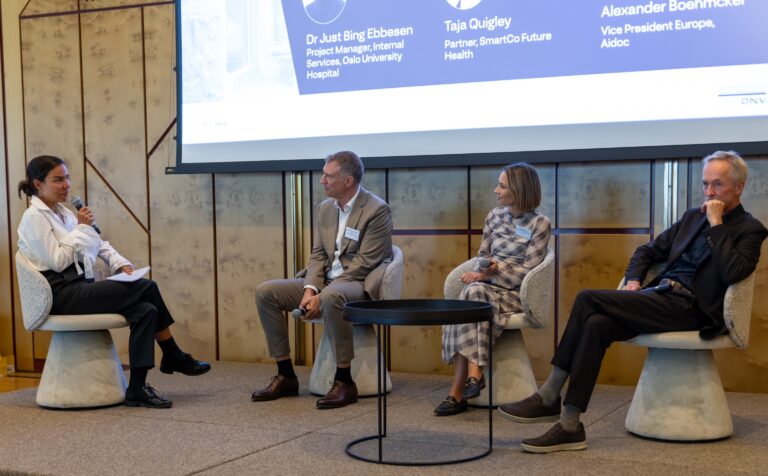
How do we turn digital investment into measurable benefits for patients and frontline teams?It’s a question that comes up frequently in healthcare, and one I had the opportunity to explore in September when I joined the “Is your ROI real?” panel discussion at the DNV Digital Health Summit, hosted in partnership with Stifel and EY-Parthenon.There continues to be significant digital investment in healthcare, with technology expected to improve productivity, transform ways of working and support better experiences and outcomes for patients and staff.But investing in and implementing technology is only part of the challenge. The real measure of success is whether it delivers the benefits we set out to achieve, and whether those benefits can be sustained beyond implementation.For me, that means looking beyond go-live.Technology alone doesn't deliver transformationA successful go live is important, but it isn't the same as successful transformation.Realising the benefits of digital investment requires us to be clear from the outset about what we're trying to achieve, how we'll measure it and who is responsible for making it happen.It also means giving teams the capacity, support and governance they need to embed new ways of working. Without that, there is a risk that technology is implemented successfully but the anticipated benefits don't fully follow.Transformation is a team sportOne of the messages that stayed with me from the summit came from Stephen McAdam's closing speech:It's a simple phrase, but it captures something fundamental.Successful transformation can't sit with one team or function. It requires clinical teams, operational colleagues, digital specialists, technology partners and delivery teams to work towards the same outcomes.That shared responsibility needs to continue beyond implementation. Go-live shouldn't mark the point at which attention moves elsewhere; it's often where the work of embedding change and realising value really begins.If we don't have data we can trust, it becomes incredibly difficult to understand whether an investment has genuinely improved productivity, patient experience or clinical outcomes.That means agreeing meaningful measures early, establishing clear baselines and continuing to track progress after implementation.ROI in healthcare also needs to be considered more broadly than a purely financial calculation. Time released back to frontline teams, improved workflows, better staff experience and improvements in patient care can all represent significant value.Looking beyond go-liveFor me, one of the biggest takeaways from the discussion was the importance of thinking about benefits realisation as part of transformation from the beginning, not something we measure retrospectively.At SCFH, this is central to how we approach transformation. We bring healthcare teams and technology partners together to agree what success looks like and share responsibility for delivering it beyond go-live.Ultimately, the value of digital investment isn't the technology itself.About TajaTaja Quigley is a Partner at SCFH, where she helps organisations reimagine care models through digital innovation. With experience tackling complex challenges across the NHS and public sector, she brings together clinical insight, technology, and delivery to build health systems that work smarter for patients, clinicians and the wider population.SCFH. A modern approach to health consulting.We combine strategic advisory with hands-on delivery, across data, digital and technology, helping health, life sciences and public sector organsisations improve outcomes, productivity and long-term value. Our diverse team brings together deep industry expertise, innovative thinking and a shared commitment to delivering outstanding results for our partners.

12 October 2026