
News
Team

Welcome to Andy Brett

Article Author

Hannah Granshaw

•

1 min read

We’re delighted to welcome Andy Brett to SCFH as a Partner, as we grow our leadership team and expand our work in digital health.

We caught up with Andy to talk about his career to date, his new role and his thoughts on digital health. Discover more about his journey and the depth of experience he brings to SCFH.

Andy. Tell us about your career journey?

I began my career as a software engineer, developing monitoring and control systems for fibre optic submarine telecommunications cables – critical infrastructure connecting countries across the globe. That early experience exposed me to complex, high-reliability systems and gave me the opportunity to work internationally, delivering installations and training across multiple countries.

I later moved into solution architecture and delivery, leading the design, integration and implementation of large-scale call centre platforms, including telephony and CRM systems, across financial services, automotive and telecommunications sectors. This broadened my experience of delivering customer-centric systems at scale, working across Europe and the US.

My transition into healthcare came through the National Programme for IT, where I spent five years contributing to one of the NHS’ most ambitious digital transformation programmes. That marked a turning point in my career, and I’ve now spent over 20 years working across health and care.

Since then, I’ve worked both within organisations and as an advisor, providing strategic, architectural and technical leadership to a wide range of health and care providers in the UK and internationally. This has included major digital transformation initiatives and several international new hospital programmes, most recently contributing to the NHS New Hospital Programme, where the focus is on embedding digital at the heart of future healthcare delivery.

What’s a project you’re especially proud of and why?

My ongoing involvement in large-scale new hospital programmes stands out, particularly through the NHS New Hospital Programme. What makes this work so meaningful is the opportunity to embed digital from the ground up, not as an add-on but as a core part of how hospitals are designed and operated.

This involves working across clinical, operational and estates teams to define requirements, align stakeholders, and ensure digital infrastructure and data capabilities are considered from the outset.

These programmes are inherently complex, bringing together multiple organisations, disciplines and priorities. Helping to navigate that complexity and translate strategic ambition into something practical and deliverable is particularly rewarding. Essentially putting digital at the heart of future healthcare, creating environments that are better connected, more efficient and better equipped to support both patients and staff.

What are you most looking forward to about joining SCFH as a Partner?

Having known several members of the team for many years, I’ve seen first-hand the impact SCFH is making across the health and care sector. I’m excited to build on those strong foundations, scaling the work, shaping new opportunities, and delivering meaningful outcomes for clients.

What sets SCFH apart?

It comes down to the people. There’s a clear, shared commitment to client engagement and delivery, not just getting the job done, but achieving the best possible outcomes for the organisations we work with.

What are the biggest opportunities for innovation in digital health?

One of the biggest opportunities is still getting the fundamentals right, particularly integration, interoperability and effective data management. Too often, organisations attempt to innovate on top of fragmented systems and inconsistent data, which limits the impact of new technologies.

Treating data as a true strategic asset, with the right governance and standards is a critical foundation, and one that many organisations are still developing.

At the same time, there is significant opportunity to apply AI in ways that support, rather than replace, day-to-day activities. While much of the focus is on clinical use cases, there is growing potential in operational areas such as estates and facilities management, especially as healthcare environments become more connected and intelligent.

Ultimately, the real opportunity lies in creating joined-up, data-driven environments where technology enhances both care delivery and how healthcare organisations operate behind the scenes.

What’s a trend people aren’t talking about enough?

One of the most overlooked challenges is the gap between digital ambition and the reality of delivery. Many organisations have clear strategies and bold aspirations, but lack the capability, capacity or maturity to translate them into sustained change.

This gap is even more evident beyond core clinical systems, particularly in estates and facilities management, where digital maturity is often lower but the opportunity is significant. As healthcare environments become more connected and data-rich, the built environment itself is generating valuable operational data, yet many organisations aren’t set up to fully utilise it.

Closing this gap, through skills, governance and a more integrated approach to data, is where much of the real opportunity lies. Organisations that can bridge ambition with practical delivery across both clinical and operational domains will see the greatest impact.

What motivates you on a tough day?

Taking a step back and focusing on the bigger picture helps. Breaking challenges down into manageable steps with the team, and finding small wins along the way, keeps momentum going. In healthcare, even small improvements can make a meaningful difference to patients, staff and services.

What’s a skill you’d love to master outside of work?

Having worked internationally over the years, I’d love to become fluent in another language.

What’s your go-to-way to unwind after a busy week?

In a word: exercise. I do resistance training three times a week, complemented by swimming and cycling at the weekend (weather permitting). Rest and recovery days are just as important too.

 

Copy link

Related Insights

Beyond go-live: Realising value from digital investment

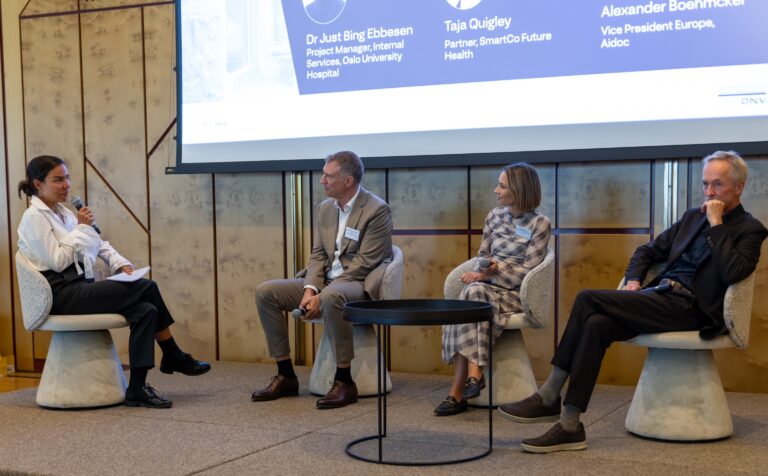
How do we turn digital investment into measurable benefits for patients and frontline teams?It’s a question that comes up frequently in healthcare, and one I had the opportunity to explore in September when I joined the “Is your ROI real?” panel discussion at the DNV Digital Health Summit, hosted in partnership with Stifel and EY-Parthenon.There continues to be significant digital investment in healthcare, with technology expected to improve productivity, transform ways of working and support better experiences and outcomes for patients and staff.But investing in and implementing technology is only part of the challenge. The real measure of success is whether it delivers the benefits we set out to achieve, and whether those benefits can be sustained beyond implementation.For me, that means looking beyond go-live.Technology alone doesn't deliver transformationA successful go live is important, but it isn't the same as successful transformation.Realising the benefits of digital investment requires us to be clear from the outset about what we're trying to achieve, how we'll measure it and who is responsible for making it happen.It also means giving teams the capacity, support and governance they need to embed new ways of working. Without that, there is a risk that technology is implemented successfully but the anticipated benefits don't fully follow.Transformation is a team sportOne of the messages that stayed with me from the summit came from Stephen McAdam's closing speech:It's a simple phrase, but it captures something fundamental.Successful transformation can't sit with one team or function. It requires clinical teams, operational colleagues, digital specialists, technology partners and delivery teams to work towards the same outcomes.That shared responsibility needs to continue beyond implementation. Go-live shouldn't mark the point at which attention moves elsewhere; it's often where the work of embedding change and realising value really begins.If we don't have data we can trust, it becomes incredibly difficult to understand whether an investment has genuinely improved productivity, patient experience or clinical outcomes.That means agreeing meaningful measures early, establishing clear baselines and continuing to track progress after implementation.ROI in healthcare also needs to be considered more broadly than a purely financial calculation. Time released back to frontline teams, improved workflows, better staff experience and improvements in patient care can all represent significant value.Looking beyond go-liveFor me, one of the biggest takeaways from the discussion was the importance of thinking about benefits realisation as part of transformation from the beginning, not something we measure retrospectively.At SCFH, this is central to how we approach transformation. We bring healthcare teams and technology partners together to agree what success looks like and share responsibility for delivering it beyond go-live.Ultimately, the value of digital investment isn't the technology itself.About TajaTaja Quigley is a Partner at SCFH, where she helps organisations reimagine care models through digital innovation. With experience tackling complex challenges across the NHS and public sector, she brings together clinical insight, technology, and delivery to build health systems that work smarter for patients, clinicians and the wider population.SCFH. A modern approach to health consulting.We combine strategic advisory with hands-on delivery, across data, digital and technology, helping health, life sciences and public sector organsisations improve outcomes, productivity and long-term value. Our diverse team brings together deep industry expertise, innovative thinking and a shared commitment to delivering outstanding results for our partners.

World Mental Health Day 2026: Why being heard matters

Mental health is personal. Everyone’s experience is different, and that makes listening to those experiences all the more important.This World Mental Health Day, the theme “Lived experiences heard: real voices, real change” puts that principle at the centre: creating space for people to share their experiences, but importantly, ensuring those experiences are valued and can help influence meaningful change.At SCFH, that message resonates with us, both in the culture we want to create for our own people and in the work we do across healthcare.Making time to connectSupporting mental wellbeing at work isn’t about one day, one initiative or having all the answers.Often, it starts with something much simpler: creating an environment where people feel comfortable talking, feel listened to and know that support is there when they need it.It can be checking in with a colleague. Taking a break together. Making time for a conversation that isn’t about work. Or simply recognising someone for the difference they’ve made.To mark World Mental Health Day, we’re encouraging our team to do exactly that.We’re making time to walk and talk, catch up over coffee and cake, and show appreciation for the people around us.Small actions, but ones that help strengthen the connections we rely on every day.The World Health Organization’s 2026 campaign highlights the importance of lived experience informing decisions, policies and services, moving from listening to meaningful involvement. That principle is just as relevant when we think about change across healthcare.New technology, digital transformation and redesigned services can have a significant impact on the people who use and deliver them. Listening to patients, clinicians and teams helps us understand not only what needs to change, but how that change will work in practice.Because successful transformation shouldn’t simply happen to people. The people experiencing it should have a voice in it.Real voices. Meaningful change.Mental wellbeing is something we all contribute to through the culture we create, the conversations we have and the way we treat the people around us.World Mental Health Day gives us an opportunity to focus on that, but its message matters every day.At SCFH, we’ll continue to make time to listen, connect and support one another, and to carry the same principle into the work we do with healthcare organisations.SCFH. A modern approach to health consulting.We combine strategic advisory with hands-on delivery, across data, digital and technology, helping health, life sciences and public sector organsisations improve outcomes, productivity and long-term value. Our diverse team brings together deep industry expertise, innovative thinking and a shared commitment to delivering outstanding results for our partners.

UK’s Best Workplaces in Tech™ 2026

Another fantastic recognition for SCFH and our team. We’re been named as one of the UK’s Best Workplaces in Tech™ 2026 by Great Place To Work® UK, ranking in the Small and Medium Companies category.Our people make SCFH what it isThis latest recognition is particularly meaningful for SCFH. Technology sits at the heart of much of what we do, but it is our people, their expertise and the way we work together that enable us to make a real difference for our clients.Creating a workplace where people can thriveAs SCFH continues to grow, we remain focused on creating a workplace where people feel trusted, supported and able to do their best work. From flexible ways of working and opportunities to develop, to our monthly company days that bring the whole team together, we want our culture to grow alongside our business.Our company days give us regular time away from the day-to-day to celebrate our wins, share successes, talk openly about where we can improve and make sure everyone has a voice in what comes next.This recognition follows SCFH being named #18 in the UK’s Best Workplaces™ 2026 and #21 in the UK’s Best Workplaces for Development™ 2026, reinforcing our commitment to building a workplace where people can grow, contribute and succeed together.What makes a UK Best Workplace in Tech?The UK’s Best Workplaces in Tech™ list is based on confidential feedback gathered through Great Place To Work’s research-backed Trust Index™ employee survey.Employees are asked about their experience across areas including trust, wellbeing, work-life balance, job satisfaction, psychological safety and fulfilment. Great Place To Work® also assesses how consistently organisations create a positive employee experience across different roles and levels of seniority.We’re proud to add this latest recognition to SCFH’s Great Place To Work achievements and, most importantly, proud of the team and culture behind it.