

Resources and insights
The latest industry news, interviews, technologies, and resources.
Great Place To Work Certification™
We’re thrilled to announce that SmartCo Future Health is officially Certified™ by Great Place To Work®. This prestigious recognition is based entirely on feedback from our employees, who share their experiences working with us. This year, 100% of our team said SmartCo Future Health is a great place to work. Great Place To Work® is the global authority on workplace culture, employee experience and leadership behaviours that drive employee retention, innovation and market-leading performance. “At SmartCo Future Health, employee experience is a top priority every day. We owe our success to our dedicated team and are proud to celebrate their contributions that make this recognition possible.” Adam Libbey, Director of Operations Our Culture in Action SmartCo Future Health prides itself on creating an environment where employees can grow, innovate and feel supported, a philosophy that empowers our people to bring their best ideas forward, build meaningful careers and make a positive impact. We’re committed to driving impact beyond business, championing diversity and inclusion, supporting local communities and leading with sustainability. These values shape how we care for our people, how we work together, and how every team member can be proud of the difference they make. “Great Place To Work Certification is a highly coveted achievement that requires consistent and intentional dedication to the overall employee experience. By successfully earning this recognition, it is evident that SmartCo Future Health stands out as one of the top companies to work for, providing a great workplace environment for its employees.” Sarah Lewis-Kulin, the Vice President of Global Recognition at Great Place To Work. We’re incredibly proud of our people. Thank you for making SmartCo Future Health a great place to work.

Hannah Granshaw
24 November 2025
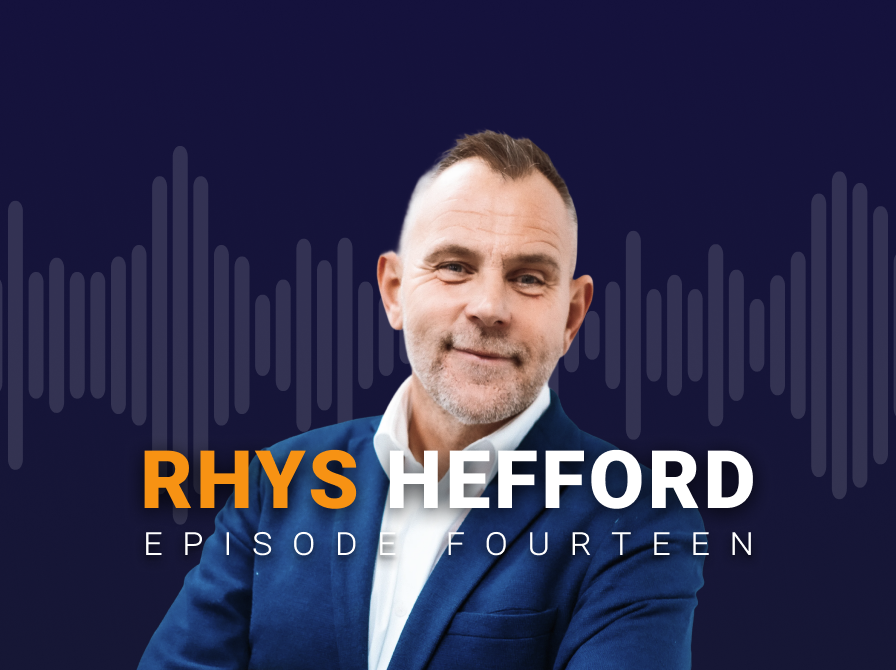
Unlocking Value with Rhys Hefford
At SmartCo Future Health, we believe productivity and purpose go hand in hand. In the latest episode of Unlocking Value, our Co-Founder, Rhys Hefford joins John Howard, Garwood Growth, to explore what it really takes to build organisations that perform, evolve and endure. Rhys shares how forward-thinking leaders can sustain momentum, plan for succession and design businesses that thrive beyond any one individual. Key insights include: Building value early and focusing on what truly moves the needle Preparing teams and structures for long-term success Putting purpose at the heart of growth Why letting go, at the right time, is a mark of great leadership For leaders in professional services, it’s a powerful reflection on scaling with intent and creating impact that lasts. Read more here: Episode 14: Rhys Hefford – Build, Scale, Exit, Repeat: A Serial Founder’s Playbook
Hannah Granshaw
12 November 2025
Armed Forces Covenant
We’re proud to announce that SmartCo Future Health has become a signatory of the Armed Forces Covenant, marking an important milestone in our commitment to those who serve, have served and the families who support them. The Covenant represents our promise to uphold its core principles, ensuring that members of the Armed Forces community are treated with fairness, respect and understanding. At SCFH, we deeply value the contribution that service personnel, veterans, reservists, cadets and military families make to our communities. Their dedication, resilience and teamwork inspire many of the values we hold dear as an organisation. As part of our commitment, we will: Celebrate and promote the Armed Forces community across our work, highlighting the skills, values and experiences they bring Create opportunities by developing inclusive recruitment and mentoring pathways for veterans, reservists and their families Foster understanding and appreciation within our own teams, building awareness and respect through communication, training and storytelling Give back through fundraising and volunteering, supporting campaigns such as the Poppy Appeal and Armed Forces Day This is more than a signature for us. It’s a heartfelt commitment to make a positive difference for those who have given so much. We’re proud to stand alongside other organisations across the UK in showing our appreciation and support for the Armed Forces community. Together, we honour their service and strengthen the bonds between business, community and those who protect our nation. “Signing the Armed Forces Covenant is a proud moment for us. We’re fortunate to work alongside people who embody the same sense of service, teamwork and resilience that the Armed Forces represent. This pledge is our way of saying thank you, by ensuring that veterans, reservists and military families are recognised, supported and given every opportunity to thrive within our organisation and beyond.” Adam Libby (Director of Operations and Former British Army Officer) SCFH Armed Forces Covenant
Hannah Granshaw
3 November 2025

How Technology Can Empower the NHS
At techUK’s recent event, “Unlocking Workforce Efficiency – How Technology Can Empower the NHS”, chaired by Jill de Bene, Director at SmartCo Future Health, industry leaders explored how digital innovation can shape a more productive and sustainable health service over the next decade. Key themes for long-term productivity and transformation included: Building digital confidence and supporting staff to adapt and thrive in technology-enabled environments Putting people before process, ensuring every change starts with the human story and clinical purpose Using automation strategically to release time for patient care and higher-value work Connecting knowledge across silos to unlock collective expertise and improve decision-making Embedding collaboration and human-centred design as the foundation of continuous improvement Digital transformation is not only about systems it’s a 10-year cultural shift towards smarter, more connected ways of working that empower people and deliver lasting productivity gains across the NHS. SmartCo Future Health is proud to continue supporting this journey, working with partners across health and care to translate innovation into meaningful, measurable impact for staff and patients alike. Read more and watch the full video here: Unlocking workforce efficiency – how technology can empower the NHS
Hannah Granshaw
1 November 2025

Awarded ISO Certifications
We’re proud to announce that SCFH has successfully upheld our ISO certifications, completing both our Stage 2 ISO 14001 (Environmental Management) and Surveillance ISO 9001 (Quality Management) audits. This achievement is more than just a certification. It reflects our ongoing commitment to quality, sustainability and continuous improvement across our business. From refining our processes and products to the positive impact we create for our clients, community and the environment, achieving these internationally recognised standards shows that excellence and responsibility are central to everything we do, reinforcing SCFH as a trusted and responsible partner. “Achieving these certifications once again is a testament to the hard work, dedication and expertise of our team. Their commitment ensures we consistently deliver high-quality solutions while minimising our environmental impact.” Adam Libby (Head of Client Services and Operations) A huge thank you to our team for making this possible. Together, we will continue to drive innovation, quality and sustainability forward.
Hannah Granshaw
21 October 2025
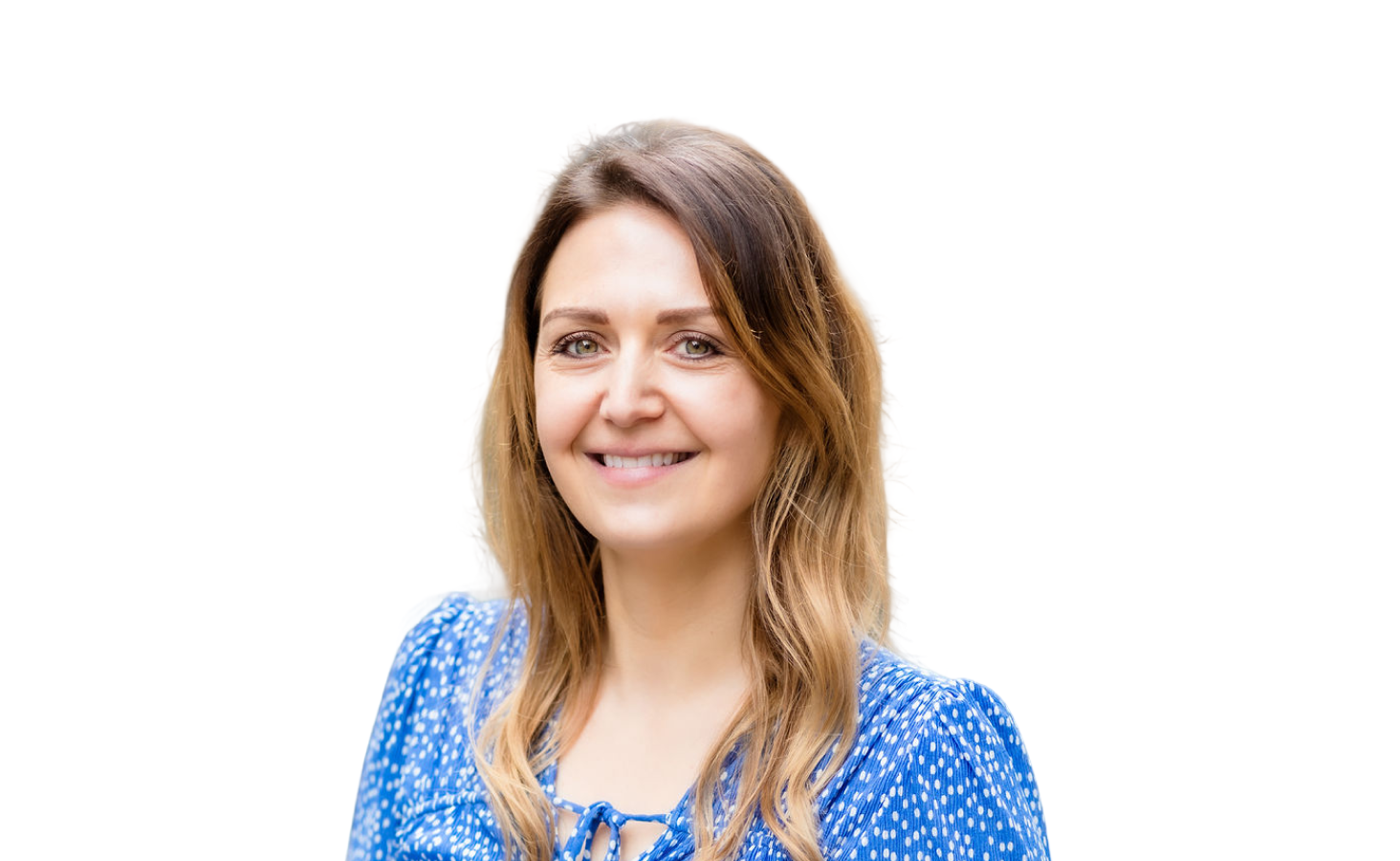
Welcome to Tara Thorne
A warm welcome to Tara Thorne who joins the SCFH team as our new Operations Support Consultant. We sat down with Tara to hear about her career journey, her new role and what excites her about joining SCFH. Read on to learn more about her background and the experience she brings to the team. Hi Tara. What’s your new role, and what will you be focusing on? I’ve joined SCFH as an Operations Support Consultant, providing day-to-day support across compliance, contract administration and general operations. My responsibilities include preparing and managing contract documentation, coordinating associate consultant onboarding, maintaining key registers and trackers, and delivering administrative support to the leadership team and project managers. Tell us a little bit about your career background With over 15 years of professional experience across the insurance and real estate sectors, I’ve developed strong expertise in administrative support, client liaison and office coordination. I spent five years in insurance and a further ten in real estate, where I refined my skills in contract preparation, document management and supporting senior leadership teams. I take pride in creating efficient processes, fostering positive client relationships and ensuring smooth, effective day-to-day operations. What attracted you to join SCFH? I was looking for a career move that offered both growth and long-term development. SCFH’s continued growth brings exciting opportunities. What impressed me most is their flexible and supportive culture, particularly for working parents. It feels like the perfect environment to contribute my skills while continuing to develop professionally. What excites you most about this new opportunity? I’m excited to build new relationships, stay busy with meaningful work and contribute to helping the company achieve excellence. What’s something that always makes you laugh? A great pun always makes me laugh. The punnier, the better! If you had a superpower what would it be? Self-awareness. To truly connect with others, you need to understand yourself – your strengths, weaknesses, quirks and triggers. That self-knowledge shapes how you engage with people and rise to different situations. What’s the best piece of advice you’ve ever received? Enjoy the little moments. As cliché as it sounds, time really does fly. A year can feel like yesterday, yet so much changes. Appreciating small moments along the way helps you realise their value before they’re gone.
Hannah Granshaw
30 September 2025
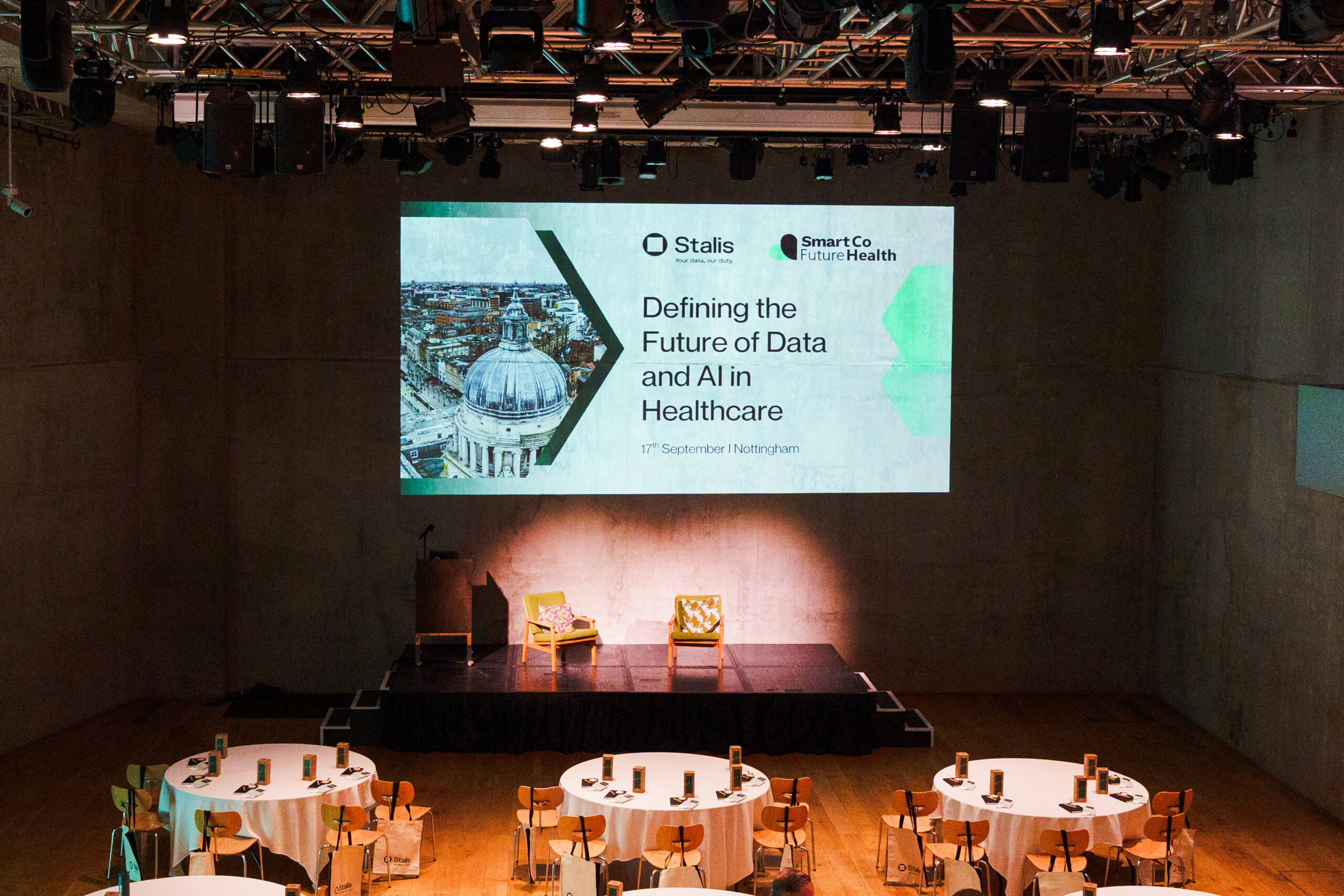
Smarter Health. Real Results
Our recent SmartCo Future Health event, partnered with Stalis, epitomised why we do what we do. It brought together partners, clients and projects to showcase the art of the possible, and to spark new conversations about shaping healthcare for now and generations to come. More than just a showcase, the event created genuine connections: people who wanted to be in the room together, sharing insights, building relationships and connecting the dots across healthcare innovation. What made it truly special was the authenticity, the chance to have real conversations, to laugh together and to connect without pretence. At its heart, it was about being human beings who love what they do. Our focus on genomics provoked a dialogue we rarely get to hear, and one of the most important. It gave us the chance to share the exciting plans ahead, with the NHS, life sciences and genome sequencing. Preventative care is advancing at pace, and more voices are needed in the conversation: scientists, innovators and healthcare leaders working together to unlock the next generation of care. Innovation was also front and centre. DNV Imatis demonstrated the rapid productivity gains that can be achieved through data, integration and interoperability across entire hospitals and healthcare systems. Who knew laundry and digital could be so closely intertwined? Our FDP integrated project team told the story of how we have solved some of the most complex challenges, working nationally, regionally and locally to co-design solutions that deliver tangible results. We can’t wait to showcase more of our projects, demonstrating how intelligent automation, AI and data are delivering ROI and insights at a pace we’ve never seen before. This event also reinforced the need for layered innovation, rather than wholesale disruption – as the way to unlock inefficiencies and build lasting change. Join us at the next SmartCo Future Health event to be part of the conversation and see first-hand how innovation is creating the future of health. About Taja Taja Quigley is a Partner at SmartCo Future Health, where she helps organisations reimagine care models through digital innovation. With experience tackling complex challenges across the NHS and public sector, she brings together clinical insight, technology, and delivery to build health systems that work smarter for patients, clinicians and the wider population. About SmartCo Future Health SmartCo Future Health is an award-winning consultancy shaping the future of healthcare. We bring a best-in-class team and future-focused approach; empowering clients, programmes and partners. We are a people first business, prioritising employee well-being, flexible working and equal opportunities for all.

Taja Quigley
22 September 2025
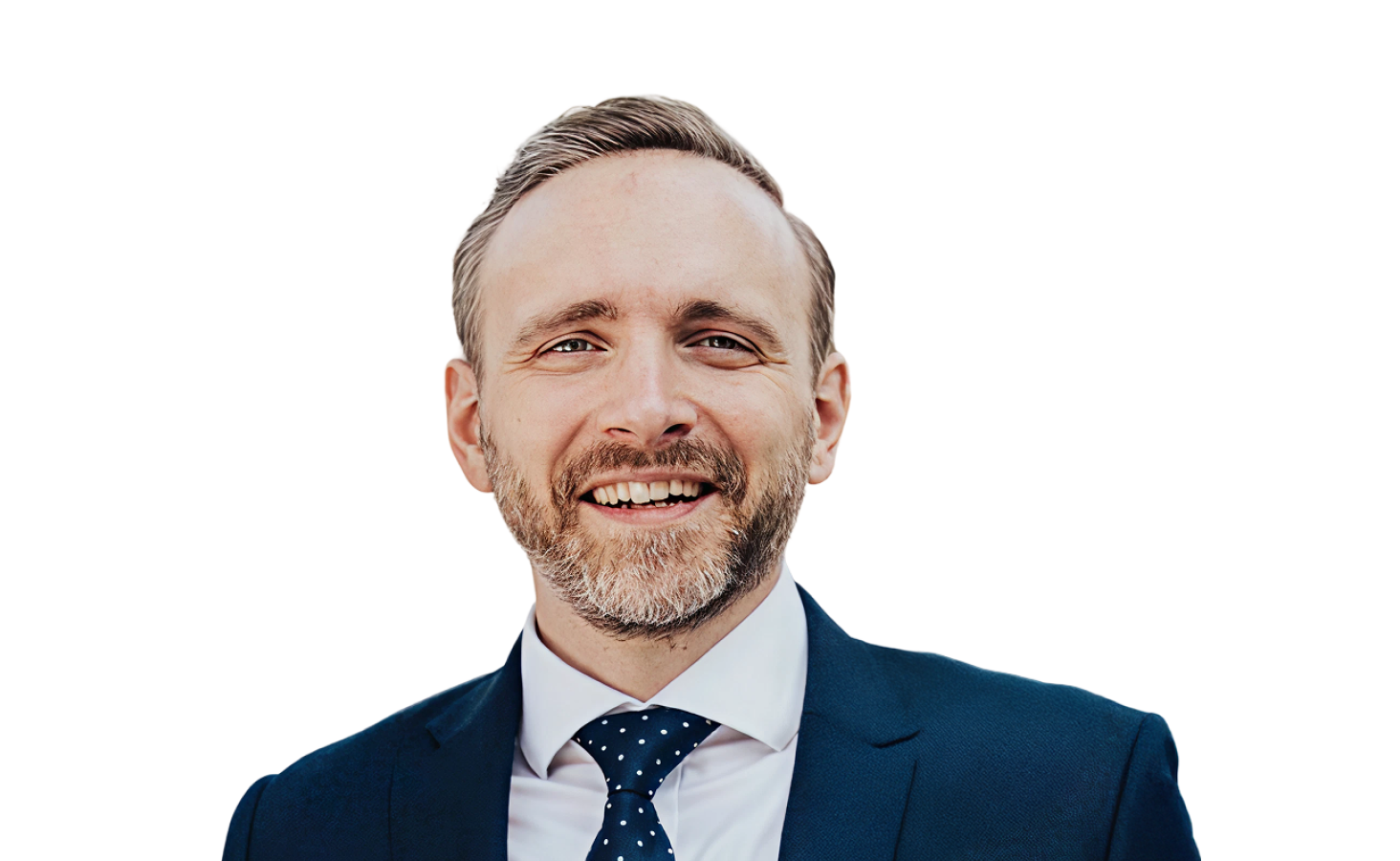
Welcome to Mark Bishop
We’re thrilled to welcome Mark Bishop to the SmartCo Future Health leadership team as Director of Technology Services. We recently caught up with Mark to learn more about his career journey, his new role and what how he sees his role contributing to the future of health. Read on to discover his story and the valuable experience he brings to the team. Hi Mark. What’s your new role, and what will you be focusing on? I’m stepping into the role of Director of Technology Services, where I’ll be leading the technology side of SmartCo Future Health. My focus will be on continuing to build upon the strong foundation already in place, scaling our existing technology services and aligning our new offerings with the evolving needs of healthcare. This includes supporting the digital transformation ambitions outlined in the NHS 10-year plan and ensuring our solutions help the sector progress in a meaningful, sustainable way. What has been your career leading up to SmartCo? I started in customer service at my local Waitrose when I was 16, working on the front desk while studying IT at college. At 18, I took my first role in the NHS as a desktop engineer. Over the next 16 years, I progressed through a wide range of technical roles, eventually becoming an Enterprise/Solutions Architect. From there, I joined a consultancy to help grow its technology business, where I spent eight years developing services across technical infrastructure, cybersecurity and managed services. More recently, I’ve been working independently as a Technical Architect on a first-of-its-kind EPR deployment in Essex – an exciting project that has shown real collaboration across Acute, Mental Health and Community services within two NHS organisations. What excites you most about your new role and responsibilities? What really excites me is the impact SmartCo is already having – delivering real, measurable change that improves outcomes for patients, staff and Trusts alike. Expanding our technology capabilities means we can bring even greater value to our clients. I’m not here to sell unnecessary solutions; I’m here to build services that help organisations optimise what they already have and move forward with confidence. My passion for the NHS has never wavered since my first day as a desktop engineer, and it’s clear that same passion runs deep across the SmartCo team. Why SmartCo Future Health? There’s a real buzz around SmartCo Future Health. The team is not only incredibly talented but also genuinely lovely to work with, and our customers feel the same way. When organisations are coming to you because of the reputation you’ve built and the outcomes you’ve delivered, that says everything. It’s clear SmartCo is doing things the right way. If you could learn a new skill or hobby this year, what would it be? I’d love to give paddleboarding a go. My kids have tried it and really enjoyed it, and some friends are into it too – it just looks like a great way to enjoy the outdoors. I’m not sure I have the core strength for it just yet, but I’m always up for a challenge. Anything that gets the kids outside and active is a win in my book. What’s a recent book, podcast, or show you’ve enjoyed and would recommend? I recently read Diddly Squat by Jeremy Clarkson, which I received as a Christmas gift. I’ve also been following his Clarkson’s Farm series. It’s both entertaining and eye-opening, offering a real look into the challenges British farmers face. It’s taught me a lot about agriculture in the UK. I’d definitely recommend giving it a watch. What’s a hidden talent or fun fact about you that few people know? I’m a lifelong rugby fan and have played for my local club since I was 10. Over the years, I’ve had the chance to play at iconic venues like Twickenham and Allianz Park, which was a lot of fun. I’ve also travelled to every Rugby World Cup since 2007 (with the 2015 tournament conveniently in England!) and plan to keep that tradition going for as long as I can.
Hannah Granshaw
15 September 2025
Optara Consulting Acquisition
We’re delighted to announce that SmartCo Future Health has acquired Optara Consulting, a specialist healthcare technology consultancy known for its deep sector expertise and outstanding client partnerships. This strategic move strengthens SmartCo Future Health’s position as a leader in delivering innovative, technology-driven solutions for the healthcare sector. It also reinforces our commitment to attracting top talent and scaling our capabilities to better serve our clients. As part of this exciting development, Optara’s Founder and Managing Director, Mark Bishop, will be joining SmartCo’s executive leadership team as Director of Technology Services. Mark brings with him a wealth of experience, a proven track record of delivery, and a highly regarded team that shares our mission to transform healthcare through innovation. Having worked closely with Optara in recent months, it quickly became clear that Mark and his team’s reputation for excellence is well deserved. Their technical depth, integrity and client-first mindset align perfectly with SmartCo’s values. This acquisition is a major step forward for us as we continue to expand our impact across the healthcare ecosystem. Rhys Hefford, Chair, SmartCo Future Health I’m incredibly proud of what we’ve built at Optara. It’s been an amazing journey. That said, the opportunity to join forces with SmartCo Future Health was one I couldn’t pass up. Together, we have the scale, expertise and vision to drive meaningful change in the healthcare sector. I’m excited for what’s ahead. Mark Bishop, Founder, Optara Please join us in welcoming Mark and the Optara team to SmartCo Future Health.
Hannah Granshaw
12 September 2025